PATRICIO FERRARI
POLYGLOT POET · LITERARY TRANSLATOR · EDITOR
New Release
A lyrical and archival journey through languages, inheritances, and crossings.
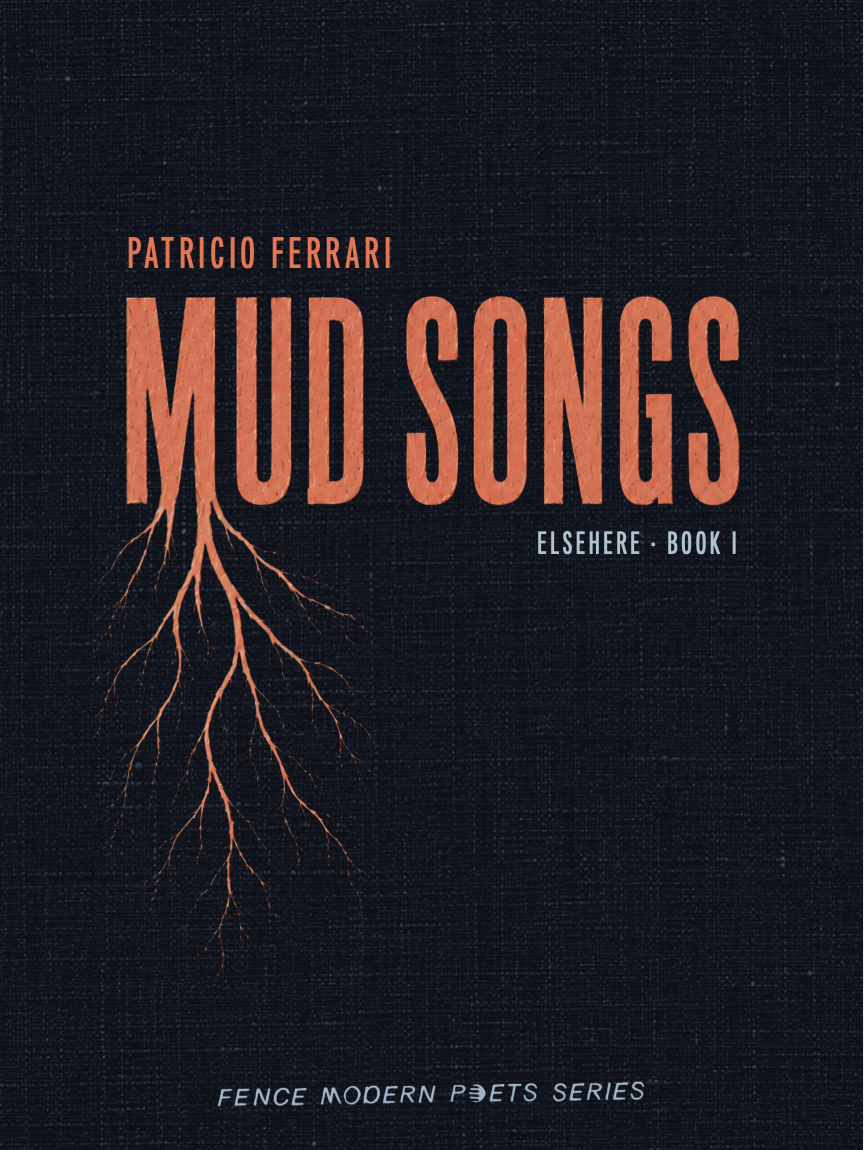
Fence Modern Poets Series 2026
Rooted in Buenos Aires and composed across languages, Mud Songs: Elsehere Book I, the opening volume of the Elsehere trilogy, collects poems that trace migration, inheritance, identity, loss, and renewal.
English, Castellano, Lunfardo, Italian, Ladino, Yiddish, and French converge here not as translations of each other, but as neighbors—voices moving across ports, generations, and identities.
Fence Books | $19.50 | ISBN 978-1-944380-29-8
Published: November 24, 2026
How does one build a home within language?
Composed over more than ten years between New York and Buenos Aires, these poems circle back repeatedly to one question.
SELF IS A LONG ARRIVAL
THE EAR IS THE FIRST EROS
THE SEA UNSEAS WHAT IS NOT SEA
I, PERPETUALLY ARRIVING / AN IMMIGRANT TO MYSELF
SELF IS A LONG ARRIVAL THE EAR IS THE FIRST EROS THE SEA UNSEAS WHAT IS NOT SEA I, PERPETUALLY ARRIVING / AN IMMIGRANT TO MYSELF
Poetry as Geography
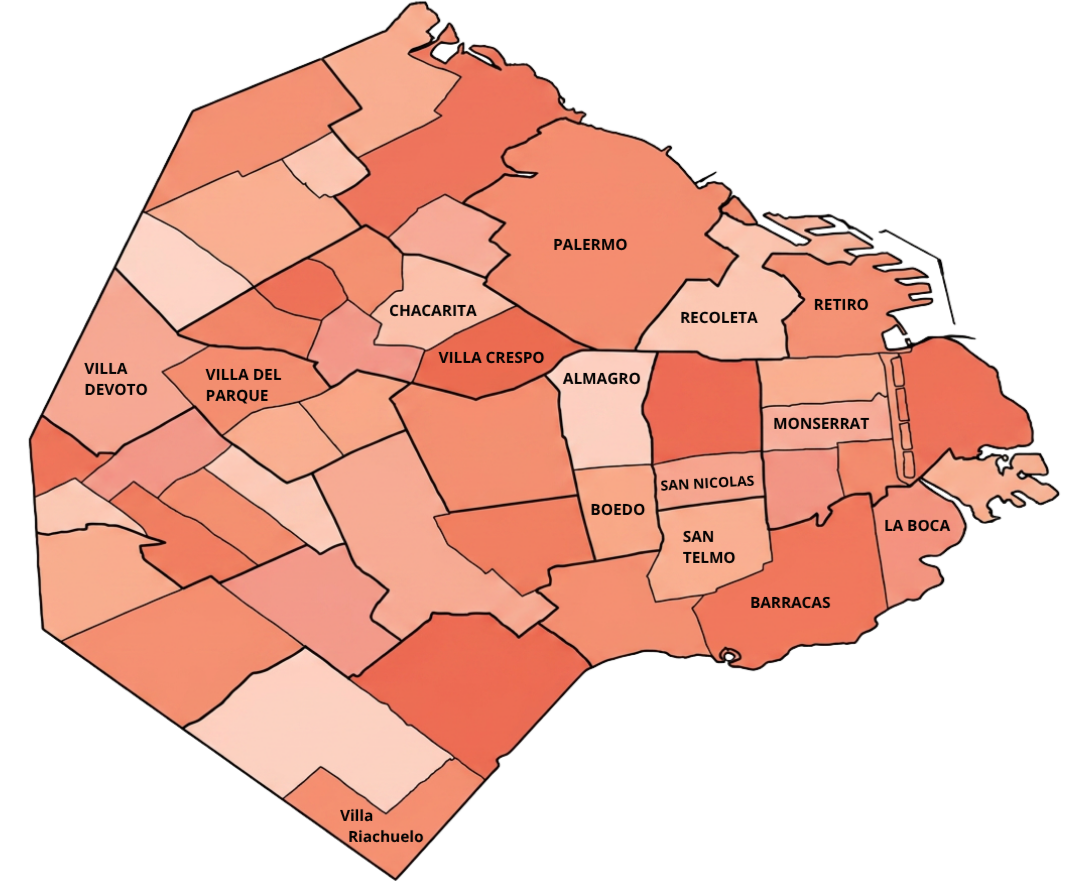
Patricio Ferrari returns to Buenos Aires after many years living abroad. Walking through Monserrat, San Telmo, Barracas, La Boca, and other neighborhoods, he hears the city anew: in street vernacular and tango, in the Castellano and Italian of his childhood, and in words carried by generations of immigrants.
Mud Songs asks what it means to return when both the place and the person returning have changed. Its poems make a home in the crossings themselves, where the voices of the living and the dead continue to transform one another.
Mud Songs begins
when one tongue
becomes another self.— Patricio Ferrari

Exophony—writing in a language other than one’s native tongue—shapes Mud Songs’ emotional and formal life. Through lyric and prose poems, erasures, multilingual wordplay, ekphrasis, and a musical score, the book explores what Ferrari calls heterophony: the different selves that writing across languages can bring into being.
Exophony & Heterophony
Poets & Critics Are Saying
“Patricio Ferrari’s remarkable
art of translanguaging [...]
opens a frontier in poetry.”
—Forrest Gander
“Mud Songs is a revelation of
history as language, and language
as geography.”
—Martin Corless-Smith
“Playing one tongue off another,
he creates a music that resonates
beyond any single linguistic system.”
—Cole Swensen
“An ode to language’s boundless plasticity
and the loving entangoment of his own and
his native Buenos Aires’ many languages.”
—Mónica de la Torre
“Patricio Ferrari is a poet
of language, form, meaning
and music.”
—Pádraig Ó Tuama
“Esta variedad, tanto en el lenguaje como en los temas abordados, muestra la singular riqueza de Mud Songs, una riqueza que sin duda atrapará al lector.”
—Cristina Piña
Behind Mud Songs
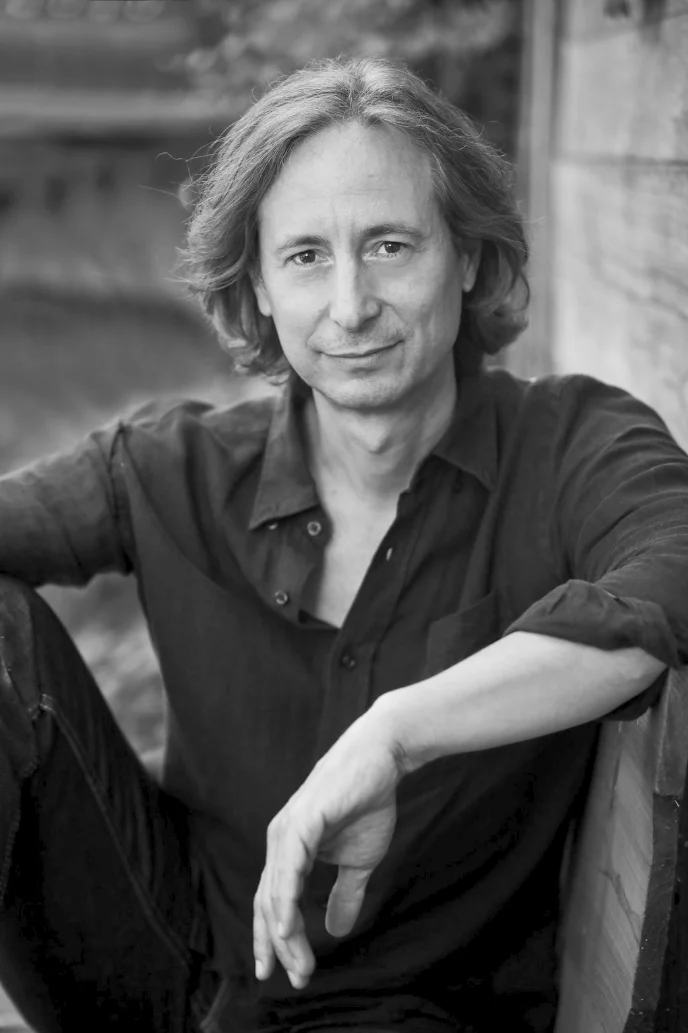
“I grew up in a language school outside Buenos Aires. While pregnant with me, my mother taught English from our small apartment. Later, my parents built classrooms on the lot meant for our home and established San Patricio Language Institute. At home, I spoke Argentine Spanish, while regional Italian words survived in the kitchen and in my grandparents’ voices.
I left Argentina for the U.S. as an exchange student at sixteen, later earning degrees in philosophy and French through soccer and other scholarships. After more than a decade largely away from everyday English—first in India, then studying and researching in France, Germany, Portugal, and Sweden—I returned to the U.S. in fall 2014. Elsehere took shape at Brown University, where I was a postdoctoral researcher and then an MFA student between 2014 and 2017. Editing and translating the work of Fernando Pessoa’s fictitious authors across Portuguese, English, and French, alongside Alejandra Pizarnik’s French poems, sharpened a central question: who becomes possible in an adopted language?
Mud Songs took fuller shape when I returned to Buenos Aires after the death of my mother’s longtime companion, my “mud father.” My biological father had died years earlier after prolonged psychiatric institutionalization. Walking the old neighborhoods, I listened to street voices, read patients’ inscriptions at Borda psychiatric hospital, revisited family histories, explored literary archives, and followed immigrant traces in everyday speech, particularly near the city’s port.
Writing primarily in English about these intimate Argentine experiences brought distance and closeness into the same line. Spanish and Italian entered through sound, memory, and affection, reshaping the English. I wanted to keep that movement audible: to discover how grief and love speak across languages, and how the places we leave continue to live in our mouths.”
Photo credits: Melanie Willett